How many legs do ladybugs have is a common question: all members of the family Coccinellidae have exactly six jointed legs. These legs consist of specific anatomical segments—the coxa, trochanter, femur, tibia, and tarsus—which play a critical role in their survival, including defense mechanisms like reflex bleeding.
The Unique Anatomy of Ladybug Legs
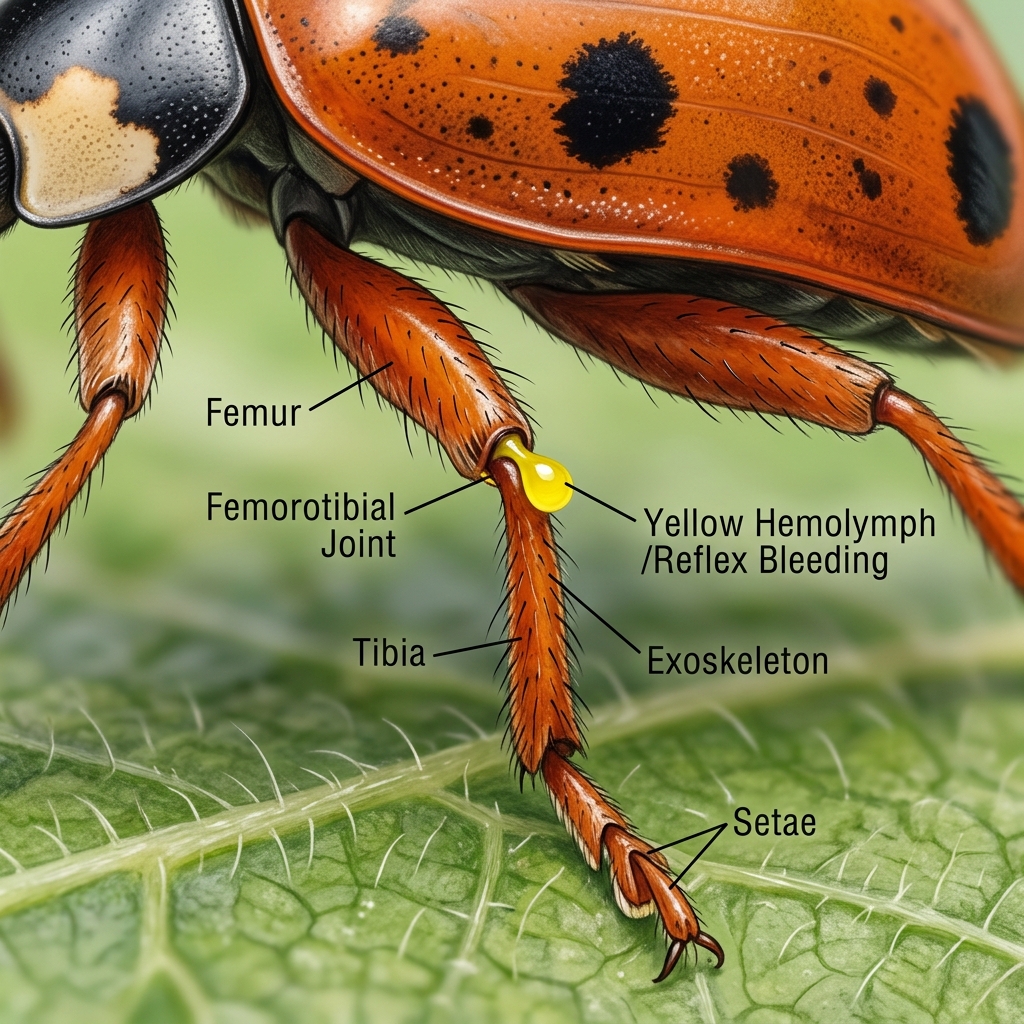
Understanding the ladybug number of legs begins by looking closely at their structure. Attached to the thorax, each of the six legs features five distinct segments: the coxa, trochanter, femur, tibia, and tarsus. While larvae have stubby, almost worm-like appendages during their early growth stages, adult ladybugs develop fully functional legs tailored specifically for an active lifestyle of hunting. Their specialized tarsi (feet) are remarkable evolutionary traits. These tarsi feature tiny claws combined with microscopic adhesive pads, enabling the beetles to effortlessly walk upside down on smooth, slippery leaves as they track down aphids and other soft-bodied garden pests.

Reflex Bleeding: A Chemical Defense Mechanism
If you’ve ever asked, how many legs does a ladybug have, you might also wonder what happens when those legs are threatened by a predator. A fascinating and highly effective behavioral trait is autohaemorrhaging, also commonly known as reflex bleeding. When a predator like a bird or a larger insect approaches, a ladybug can intentionally secrete droplets of foul-tasting, toxic hemolymph directly from their leg joints (effectively acting as their “knees”). These potent alkaloids act as a powerful natural deterrent. The bright yellow fluid not only leaves predators with a bitter taste but also emits a strong odor, often saving the beetle’s life and teaching the predator to avoid the bright red warning colors of the ladybug in the future.
Key Facts About Coccinellidae Legs
The six ladybug legs do much more than simply provide mobility; they are a versatile multi-tool designed for hunting, establishing an unbreakable grip, and ensuring survival in the wild.
| Segment / Feature | Function in Survival & Hunting |
|---|---|
| Tarsus (Foot) | Equipped with claws and adhesive pads to grip smooth leaves and walk upside down. |
| Leg Joints (Knees) | Release toxic hemolymph containing foul-tasting alkaloids to deter predators. |
| Femur & Tibia | Provide the strong, muscular leverage needed for steady movement over rough terrain. |
Frequently Asked Questions
How many legs does a ladybug have in total?
Every ladybug has exactly six legs. Like all adult insects, their six jointed legs are attached directly to the central section of their body, known as the thorax.
What is reflex bleeding in ladybugs?
Reflex bleeding, or autohaemorrhaging, is a highly effective defense mechanism where ladybugs secrete hemolymph from their leg joints. This unique fluid contains toxic alkaloids that taste and smell terrible to potential predators, allowing the ladybug to escape unharmed.
Do ladybug larvae have legs?
Yes, but unlike adults, ladybug larvae possess much shorter, stubby appendages. They go through metamorphosis before developing their fully functional, six jointed adult legs.
Proč právě how many legs do ladybugs have?
Pokud se zajímáte o téma how many legs do ladybugs have, je důležité znát veškeré dostupné informace a vybrat to nejlepší možné řešení. Naše zkušenosti v této oblasti jsou rozsáhlé.
Get our latest guides, news, and insights highlighted in your Google Search & AI Overviews.